

Baby care essentials
Baby care essentials: Oral care, bath time, hair care and everyday hygiene for Kiwi babies.
Bringing a new baby home is wonderfully exciting, but it can also bring questions. How warm should the bath be? Does a newborn really need a bath every day? Which wipes, shampoo, and wash should you choose? And when should you brush that first tooth?
Baby care does not need to be complicated - a few gentle products, a simple routine and some practical tips can help make everyday care feel much easier.
Every baby is different, so what works beautifully for one whānau may need adjusting for another. Start gently, watch how your baby’s skin and routine respond, and make changes as needed. If you’re unsure, chat with your Plunket nurse or healthcare professional.
Bathing and hair care
How to bathe a newborn
Your midwife or maternity-care team can guide you on the timing of your baby’s first bath. There is no need to rush it, and gentle top-and-tail cleaning with warm water can be enough while you find your rhythm. Choose a time when your baby is settled and you are not likely to be interrupted.
When you choose to bathe your baby is up to you. Some parents like to bathe them early on, whereas others may wait until baby is a few weeks old.
- Gather everything first. Place a washcloth, towel, clean nappy, clothes and any gentle baby wash within reach.
- Prepare a warm room. Babies cool down quickly when wet, so keep the space comfortably warm. Keep bath away from any open window or breezes.
- Fill the bath safely. Start with cold water, then add hot water. A baby bath should be comfortably warm, not hot, around 37°C to 38°C. Test it before placing your baby in the water: use a bath thermometer if you have one, or test the water with the inside of your wrist or elbow. It should feel similar to body temperature – not too hot and not too cold. Many parents will use a baby specific bath or tub rather than a full bath – but again, this is up to you and what you have available.
- Support your baby. Keep one arm securely supporting their head, neck and upper body. Maintain a hand on a young baby throughout the bath.
- Wash gently. Begin with the face using plain water, then clean the body with a washcloth, paying attention to skin folds. Use a small amount of mild baby cleanser only if needed.
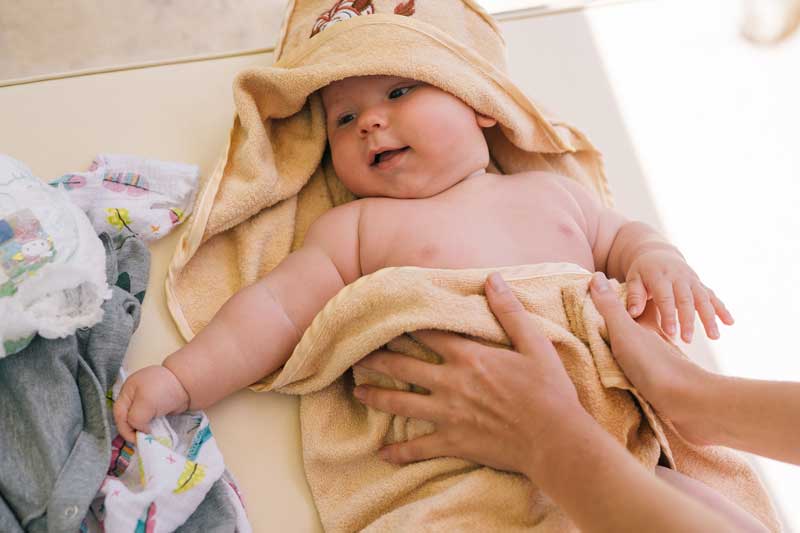
- Lift and dry carefully. Babies can be slippery when wet so take extra care when lifting them out of the bath. Wrap baby in a towel straight away and pat, rather than rub, the skin dry. Dry between folds before putting on a fresh nappy and clean clothes.
Never leave a baby or toddler alone in or near water, even for a moment. Keep everything within reach beforehand. If the phone or door needs your attention, take your baby with you.
How often should you bathe a baby?
Newborns do not need a full bath every day, and some parents may choose to wait a couple of weeks (or longer) before bathing for the first time. Newborns don’t need more than a couple of full baths a week. If you’re not bathing your baby regularly be sure to still check any skinfolds- around the neck, hands, feet and nappy area and gently wipe with a washcloth regularly to avoid any irritation.
As babies get older, bath time may become part of the bedtime routine or simply necessary after food, crawling and outdoor adventures. Daily bathing can suit some families, but keep baths short and products gentle, particularly if your baby has dry or sensitive skin.
Baby bath essentials
- Baby bath or another stable, baby-safe bathing space
- Soft washcloths
- Hooded towel or soft regular towel
- Gentle baby wash and shampoo
- Simple baby moisturizer or baby oil, if needed
- Fresh nappy
- Clean clothes
- Bath thermometer, optional but useful
Shop Baby Bath & Skincare

5
99
ea
$3.00/100ml

6
79
ea
$0.68/100ml

6
99
ea
$1.75/100g

9
99
ea
$2.00/100ml
Aveeno Baby Daily Moisture Wash & Shampoo
236ml
9.
99
$4.23/100ml

13
99
ea
$5.93/100ml
Nourish Goats Milk Baby Body Wash
275ml
4.
99
$1.81/100ml

7
89
ea
$2.87/100ml

14
99
ea
$3.75/100ml
Nourish Lavender And Goats Milk Baby Bedtime Bath
275ml
4.
99
$1.81/100ml

7
89
ea
$2.87/100ml

5
99
ea
$3.00/100ml
Nourish Jungle Fruits Baby Bubble Bath
275ml
4.
99
$1.81/100ml

7
89
ea
$2.87/100ml
Silk Baby Body Wash
200ml
2.
69
$1.35/100ml

3
29
ea
$1.65/100ml

22
99
ea
$11.16/100g
Ecostore Baby Sleepytime Bath
200ml
6.
99
$3.50/100ml

9
99
ea
$5.00/100ml

9
99
ea
$2.00/100ml

19
99
ea
$3.76/100ml
Ecostore Baby Body Wash
200ml
6.
99
$3.50/100ml

9
99
ea
$5.00/100ml

3
99
ea
$6.65/100

14
99
ea
$3.75/100ml

11
49
ea
$2.30/100ml

9
99
ea
$3.33/100ml
1 / 0
Best baby shampoo: what to look for
Why babies need different shampoo
Baby scalps and skin can be more delicate than adult skin, particularly during the first few months. Adult shampoos may contain stronger cleansing ingredients or fragrances; a purpose-made baby shampoo or gentle head-to-toe wash is often an easier place to start. Many parents may also choose not to use soap or shampoos until the baby is a bit older.
What to look for
When comparing the best baby shampoo in NZ for your whānau, consider:
• A gentle, age-appropriate formula
• A tear-free option to make rinsing more comfortable
• Low-fragrance or fragrance-free choices if your baby has sensitive skin
• Clear directions and suitability for frequent or occasional use
• Simple packaging that is easy to handle with one hand
Babies do not usually need their hair shampooed every day. A small amount once or twice a week may be enough, depending on their hair, scalp and how messy life has been. Every baby is different.
Cradle cap and baby hair care
Cradle cap is common in babies and often appears as flaky or scaly patches on the scalp. Cradle cap is harmless, cause by extra oil production. Some parents may choose to leave it and that is fine. If looking to reduce the amount of cradle cap- keep hair care gentle: wash with a mild baby shampoo or treat with a mild baby oil to loosen flakes, then brush carefully with a soft brush. Avoid picking or scratching the skin.
If the area looks irritated or you are worried about your baby’s skin, seek advice from your Plunket nurse, pharmacist, GP or other healthcare professional.
Oral care: When to start brushing baby teeth
Baby teeth often begin to appear around six months. You can start building good oral-care habits before the first tooth arrives by gently wiping your baby’s gums with a clean, damp, soft cloth or muslin. Once the first tooth appears, it is time to begin brushing with an age-appropriate toothpaste and toothbrush.
Use a small, soft, baby toothbrush and brush twice a day, ideally after breakfast and just before bed. Starting early helps brushing become a familiar part of the day rather than a brand-new battle later.
Use a rice-grain-sized smear for a baby with their first teeth. Follow the pack directions and ask your oral-health provider if you are uncertain about the right product or amount.
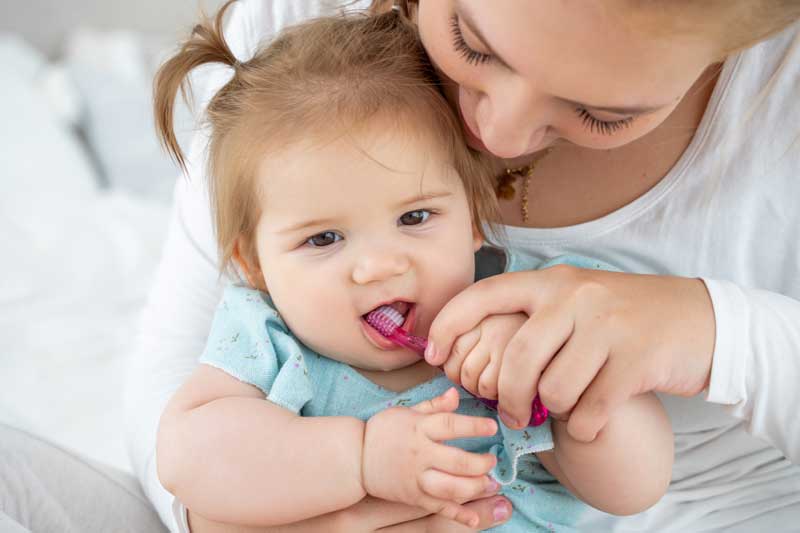
Tip: Keep it calm and positive. A short song, a favourite spot or letting baby hold a second toothbrush can all help. Babies also like seeing you lead by example – so consider brushing your teeth at the same time and letting them ‘practice’ with their own toothbrush.
How to teach baby to spit out toothpaste
Spitting is a skill that usually develops gradually, so babies and young toddlers may not be able to do it on command. You can model spitting into the sink, practice with plain water when they are old enough, and praise the attempt rather than expecting perfection.
An adult should continue helping with brushing until around eight years old.
Best baby toothbrush and toothpaste
A good place to start is with products suited to your baby’s age and stage, then choose the brush and flavour they are most comfortable using.
Best toothpaste for babies
Choose an age-appropriate fluoride toothpaste and use only the recommended small amount. Some babies prefer a mild or non-minty flavour, which can make brushing easier.
What makes a good baby toothbrush?
Look for:
• Soft bristles that clean gently around small teeth and gums
• A small brush head that fits comfortably in a baby’s mouth
• An easy-grip handle that an adult can control securely
• Age-appropriate sizing, clearly shown on the packaging
Tip: Replace the toothbrush when the bristles become worn or splayed, and do not share toothbrushes between family members.
5 tips for making tooth brushing easier
• Brush at roughly the same times each day.
• Use a short song or countdown to make it predictable.
• Let your baby hold a spare toothbrush while you do the brushing.
• Try brushing in front of a mirror so they can watch.
• Keep your response relaxed if they resist, then try again gently.
Shop Baby Oral Care


Best baby wipes: how to choose gentle wipes for your baby
What makes a good baby wipe?
Good baby wipes clean effectively without unnecessary rubbing.
Consider:
• Gentle ingredients
• Suitability for sensitive skin
• Fragrance-free options
• Enough moisture for comfortable cleaning
• Good thickness and durability
• Packaging that seals well so wipes stay moist
The best baby wipes in NZ are the ones that suit your baby’s skin, your routine and your budget. Buying a small pack first can be a handy way to test a new option before committing to a value pack.
Wipes for nappy changes
Wipes are convenient for everyday and on-the-go changes. Clean gently from front to back and use as many wipes as needed rather than rubbing hard with one. Allow the skin to dry before putting on a fresh nappy.
At home, you can also use soft cloths with warm water, particularly for newborns or when skin is easily irritated.
Wipes for sensitive skin and nappy rash
Fragrance-free or sensitive-skin wipes a good place to start. If the nappy area is irritated, choose the simplest option available and clean with a light touch. Avoid using wipes on broken skin unless the product information or a healthcare professional says they are suitable.
A rash that is severe, spreading, blistered, weeping, accompanied by other symptoms or not improving should be checked by a healthcare professional.
Baby Wipes

2
69
ea
$3.36/100
Ministars Thick & Soft Fragrance Free Baby Wipes
80pk
1.
89
$2.36/100

2
19
ea
$2.74/100
Rascals Premium Sensitive Wipes Multi Pack
3 x 80pk
8.
99
$3.75/100

10
99
ea
$4.58/100

5
99
ea
$7.49/100

3
99
ea
$4.99/100

13
49
ea
$5.62/100

4
49
ea
$3.21/100

5
89
ea
$5.89/100

1
59
ea
$0.07/ea

3
89
ea
$4.86/100

5
89
ea
$4.21/100

5
99
ea
$8.32/100

5
99
ea
$7.49/100

5
99
ea
$7.49/100

3
89
ea
$4.86/100
Silk Flushable Wipes
96pk
7.
49
$7.80/100

8
49
ea
$8.84/100

13
49
ea
$5.62/100

2
69
ea
$3.36/100

9
99
ea
$3.33/100

8
49
ea
$0.27/ea
1 / 0
Baby care FAQs
When should I start brushing my baby’s teeth?
Start brushing twice a day when the first tooth appears. Before then, you can gently wipe the gums with a clean, damp cloth.
When should my baby use toothpaste?
Use a rice-grain-sized smear of fluoride toothpaste containing at least 1000 ppm fluoride once the first tooth appears.
What is the best baby shampoo for sensitive skin?
Look for a gentle, age-appropriate, low-fragrance or fragrance-free formula labelled for sensitive skin. Try a small amount and stop if irritation develops.
What temperature should a baby bath be?
Aim for comfortably warm water, around 37°C to 38°C. Mix the water well and check it before putting your baby in.
How often should I bathe my baby?
Two or three times a week is often enough for a newborn, with top-and-tail cleaning between baths. Adjust the routine for your baby’s skin, age and daily mess.
Which baby wipes are best for sensitive skin?
Fragrance-free wipes with gentle ingredients are a good place to start. Choose a small pack to trial and stop using them if irritation develops.
What do I need for bath time?
Have a washcloth, towel, gentle wash, shampoo if needed, clean nappy and clothes within reach before the bath begins. Never leave your baby unattended to fetch something.
A gentle routine that works for your family
Start with the basics, choose gentle options and build simple routines that work for you. From a tiny toothbrush and mild shampoo to fragrance-free wipes and a warm towel waiting after the bath, the right essentials can make everyday care feel that little bit easier. Every baby is different. If something is not working, it is okay to pause, simplify, or ask for help. Your Plunket nurse, pharmacist, midwife, dentist or healthcare professional can offer guidance that suits your baby.