Christmas Trifle 101: Make-Ahead Tips and Layering Ideas
Find out how far ahead to make Christmas trifle, how to layer and store it, and get New World ideas and recipes for your festive table.
Colourful, creamy and made for sharing, trifle is a Christmas classic for good reason. It can be as traditional or creative as you like, layered with everything from berries and custard to chocolate, citrus or tropical fruit.
Most of the work can be done ahead of time, making it a great dessert for a busy Christmas Day. Just keep an eye on when you assemble it: you want enough time for the flavours to mingle and the sponge to soften, without leaving it so long that those delicious layers lose their texture.
What Goes into a Christmas Trifle?
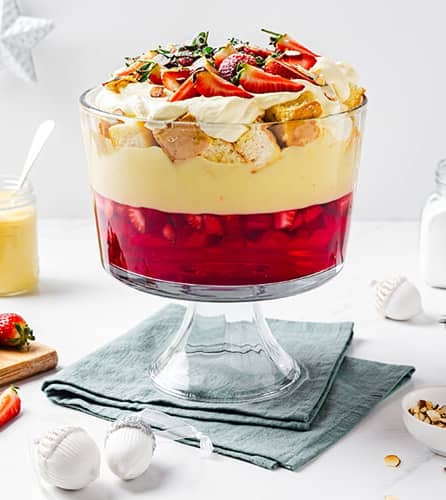
A classic trifle usually has five core components, layered together:
- Sponge – sponge cake cut up into squares which are often lightly soaked with fruit juice, sherry or another liquid.
- Fruit – fresh, canned or poached fruit, such as berries, peaches, raspberries or strawberries.
- Jelly – a classic addition, although plenty of modern trifles leave it out.
- Custard – thick, creamy custard creates that signature rich layer.
- Whipped cream – added generously on top.
Then comes the fun part: toppings and extras such as fresh berries, grated chocolate, crushed meringue, sprinkles or a drizzle of fruit sauce.
How Far in Advance Can You Make a Trifle Before It Goes Soggy?
Trifle is a brilliant make-ahead dessert, especially when you’re juggling everything else that needs to happen on Christmas Day. But there is a sweet spot when it comes to timing. Make it too early and those beautiful layers can start to lose their texture, with the sponge becoming overly soggy and the fruit releasing extra moisture.
Ideally, assemble your trifle around 6–12 hours before you plan to serve it, or the night before if you’re serving it at lunchtime. This gives the sponge time to soften and absorb some of the delicious flavours, while allowing the custard and other layers to chill and set.
If you want to get further ahead, prepare the individual components 1–2 days in advance and keep them separately covered in the fridge, then assemble closer to serving.
For the best-looking finish, consider leaving the whipped cream and decorations until a few hours before serving. Fresh berries, chocolate, crushed meringue and other toppings will look and taste their best when they haven’t spent too long sitting in the fridge.
As a general rule, trifle is at its best within about 24 hours of assembly. Keep it covered and refrigerated until you’re ready to serve.
How Do You Layer a Christmas Trifle?
The beauty of trifle is that it doesn’t need to be perfect. The key is creating distinct layers and making sure the sponge is moist and flavourful, rather than completely soaked.
- Start with the sponge Cut sponge cake into pieces and arrange them snugly across the bottom of your trifle bowl.
- Add a little liquid Drizzle the sponge lightly with fruit juice, sherry or another complementary liquid. Don’t drown it. Other layers will add moisture as the trifle rests.
- Add the fruit Spoon over fresh, canned or poached fruit. If using canned fruit, drain it well first to prevent the trifle becoming watery.
- Layer in the jelly If using jelly, let it set separately first, then spoon or cut it over the fruit. This helps keep the layers defined.
- Spoon over the custard If making custard from scratch, allow it to cool completely before layering it into the trifle. If using ready-made chilled custard, it can be added straight from the fridge.
- Repeat if needed For a large or deep trifle bowl, repeat the sponge, fruit, jelly and custard layers.
- Chill, then finish with cream Cover and refrigerate for 6–12 hours to let the flavours come together. Finish with whipped cream and your favourite toppings, such as fresh berries, grated chocolate, crushed meringue or toasted nuts.
Top tip: For those beautiful visible layers, take a little extra care arranging the fruit and sponge around the outside edge of a clear glass bowl.
Does Christmas Trifle Need to Be Refrigerated?
Yes. Trifle should always be kept refrigerated, particularly because it usually contains perishable ingredients such as custard and whipped cream.
Once assembled, cover your trifle and keep it in the fridge until you’re ready to serve. For both safety and quality, try not to leave it sitting on the Christmas table for extended periods.
For the best results, take your trifle out of the fridge shortly before serving, then return any leftovers to the fridge promptly.
Top tip: Keep your trifle covered in the fridge. This helps stop the cream and custard from drying out and prevents it picking up other flavours or aromas from the fridge.
How Can I Serve or Adapt a Christmas Trifle?
There’s more than one way to make a great trifle. Here are 10 delicious flavour ideas to give this Christmas favourite your own twist.
- Classic Berry Trifle – sponge, raspberry or strawberry jelly, mixed berries, custard and cream.
- Strawberry & White Chocolate – strawberries, vanilla sponge, custard, whipped cream and white chocolate.
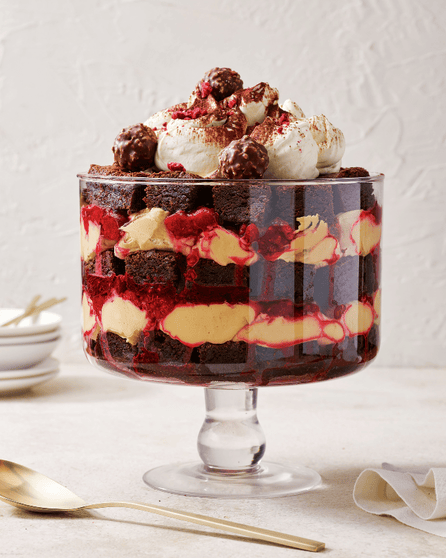
- Black Forest – chocolate cake, cherries, chocolate custard or mousse and cream, topped with grated chocolate.
- Lemon & Raspberry – lemon curd, raspberries, sponge, vanilla custard and cream.
- Peach & Passionfruit – peaches, passionfruit, sponge, custard and cream. Great for a summery NZ Christmas.
- Mango & Coconut – mango, coconut-flavoured cream, vanilla sponge and passionfruit for a tropical twist.
- Chocolate & Caramel – chocolate cake, chocolate custard, caramel sauce and whipped cream.
- Pavlova Trifle – crushed meringue, berries, cream, passionfruit and custard for a very Kiwi-inspired version.
- Tiramisu-Inspired Trifle – coffee-soaked sponge, mascarpone-style cream and cocoa, layered trifle-style.
- Gingerbread & Caramel – gingerbread or spiced cake, vanilla custard, caramel and cream, finished with crushed ginger biscuits.