Christmas Salmon 101: Choosing, Preparing and Cooking Salmon
Get New World advice for Christmas salmon, from choosing and deboning to avoiding common cooking mistakes and serving it perfectly.
Salmon is the ultimate showstopper. It's delicious, looks impressive on the table and is far easier to cook than most people think. Fresh, vibrant and full of flavour, it delivers a big wow factor without the big effort. That makes it perfect for Christmas Day, when you want something special that still feels light enough for a summer feast. See our salmon tips below so you can serve up a great salmon for Christmas Day or any other special occasion.
How Do I Choose Salmon for Christmas?
- Colour: Vibrantorange flesh, without dull, grey or brown patches.
- Texture: Flesh should look firm, plump and moist, not dry or soft.
- Smell: Fresh salmon should have a mild, clean scent, not a strong fishy smell.
- Fat lines: Fine white lines running through the flesh are natural fat and help keep salmon rich and succulent when cooked.
- For Christmas: Choose a thick, evenly sized side of salmon rather than a very tapered piece. It cooks more evenly and looks impressive served whole.
- At the New World seafood department, ask for a whole side, pin-boned skin on piece of salmon.
- Portion guide: Allow around 150–200g per person if salmon is the main protein, or around 100–150g if you're serving it as part of a larger Christmas spread.
How Do I Debone Salmon Without Tweezers?
- At your local New World seafood counter, ask for pin boned Salmon Side so you don’t have to do it yourself!
- Run your fingertips gently along the centre of the flesh to feel for any thin pin bones.
- If you find one, pull it out with clean tweezers or fish-bone pliers, pulling in the same direction the bone is pointing.
How Should I Prepare Salmon for Christmas?
One of the best things about salmon is how easily it takes on different flavours. From fresh citrus and herbs to sweet and sticky glazes or punchy Asian-inspired marinades, there are plenty of ways to make it your own. Whether you prefer something light and zesty, rich and savoury, or sweet with a little heat, the right marinade can transform your salmon into a standout dish. See our recipes below.
What Is the Biggest Mistake When Cooking Salmon?
The biggest mistake is overcooking it. Salmon can go from beautifully moist and flaky to dry surprisingly quickly, especially at the thinner tail end, which cooks faster than the thick centre. Overcooked salmon turns firm and chalky, and you may see white protein seep out of the flesh – a sign it's gone a little too far.
For a Christmas side of salmon:
- Don’t wait until it looks completely cooked through before taking it out of the oven. It will continue cooking as it rests.
- Allow for thickness: Thinner pieces cook faster, so start checking early. Tucking the thin tail end underneath helps the whole side cook evenly.
- Look for flesh that flakes easily but is still moist and slightly translucent in the thickest part.
- As a practical guide, a whole side generally takes around 15-20 minutes per kg without a glaze, and about 20-25 minutes per kg with a glaze 20–30 minutes at 180°C, depending on thickness and recipe.
- Rest it for 5–10 minutes before serving.
When in doubt, take it out a little early. You can always pop it back in the oven, but you can't undo overcooking.
What Is the Secret to Getting Perfectly Cooked Salmon?
For beautifully moist, flaky salmon:
- Cook it gently: Around 180°C works well for an oven-baked side. Aim for an internal temperature of 53°C.
- Check the thickest part: That's the last part to cook.
- Let it rest: Give it about 5 minutes before serving.
How Can I Serve Salmon for Christmas?
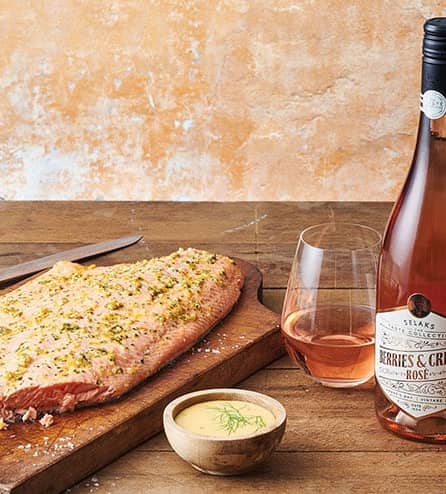
- Serve whole: Transfer the salmon onto a large platter or wooden serving board.
- Dress it up: Finish with fresh dill or parsley, lemon/orange wedges, pomegranate seeds and a drizzle of olive oil.
- Add a sauce alongside: Try a lemon & dill yoghurt sauce, crème fraîche with herbs, or mustard dressing.
- To portion: Use a serving spoon or fish slice to gently lift pieces away from the skin. There’s no need to formally slice it.
How Should I Store Leftover Christmas Salmon?
Leftover salmon is brilliant the next day served cold in salads, sandwiches or alongside leftover roast vegetables.
To store it:
- Refrigerate: Put the salmon in a covered, airtight container and keep your fridge at 2–5°C.
- Eating it cold: Aim to eat refrigerated cooked leftovers within 2 days.
- Reheating: If you're going to reheat leftovers, allow for up to 4 days refrigerated, and it should be reheated until piping hot.
- Freeze: If you won't use it promptly, portion and freeze it once cooled.